
Table of Contents
- Natural vs Synthetic Formal Fabrics
- How Fabric Weight and Drape Affect Formal Wear
- Best Luxury Fabrics for Evening Gowns
- How to Inspect Fabric Quality: A Visual Checklist
- How to Choose High Quality Formal Fabrics for Suits and Tailoring
- How to Care for Silk and Velvet Garments
- Conclusion
- Frequently Asked Questions
Last Updated: October 21, 2026
Natural vs Synthetic Formal Fabrics
The fastest way to judge a formal garment is to read the fiber content label, because fiber composition determines how a fabric drapes, breathes, creases, and ages.
Natural fibers come from plants or animals. Protein fibers include wool and silk; cellulose fibers include cotton, linen, and viscose-derived fabrics.
Synthetic blends are engineered rather than grown. Polyester, elastane, and their blends deliver crease resistance, dimensional stability, and predictable pricing.
Here is the honest trade-off:
| Fiber | Strengths | Weaknesses | Best For |
|---|---|---|---|
| Silk | Lustre, drape, breathability | Delicate, needs care | Evening gowns, blouses |
| Merino wool | Thermal regulation, recovery | Higher cost | Tailored suits |
| Linen | Breathability, texture | Wrinkles easily | Warm-weather formal |
| Polyester blend | Crease resistance, durability | Less breathable | Travel, everyday tailoring |
| Viscose | Soft hand-feel, drape | Weak when wet | Lined jackets, trousers |
Neither category is inherently better. The question is whether the fiber suits the occasion and the construction matches the fiber's strengths.
How Fabric Weight and Drape Affect Formal Wear
Fabric weight, measured in GSM (grams per square meter), predicts how a garment will hang and how formal it will read.
Drape is the companion quality. A fabric with good drapability molds to the body rather than standing away from it. Silk and viscose drape; stiff polyester does not. For a gala gown, poor drape reads as cheapness instantly, no matter what the label says.
Best Luxury Fabrics for Evening Gowns
Silk satin, silk chiffon, velvet, and fine wool crepe are the four fabrics that consistently deliver on the promise of luxury evening wear.
Silk satin gives the liquid sheen most people picture when they imagine a gown. Silk chiffon offers opacity without weight, ideal for overlays. Velvet brings depth and texture, particularly in cooler months.
What separates a good gown from a great one is not the fiber name alone but staple length and weave density.
We source evening pieces from European and Australian houses precisely because that distinction still matters to the makers we work with.
How to Inspect Fabric Quality: A Visual Checklist
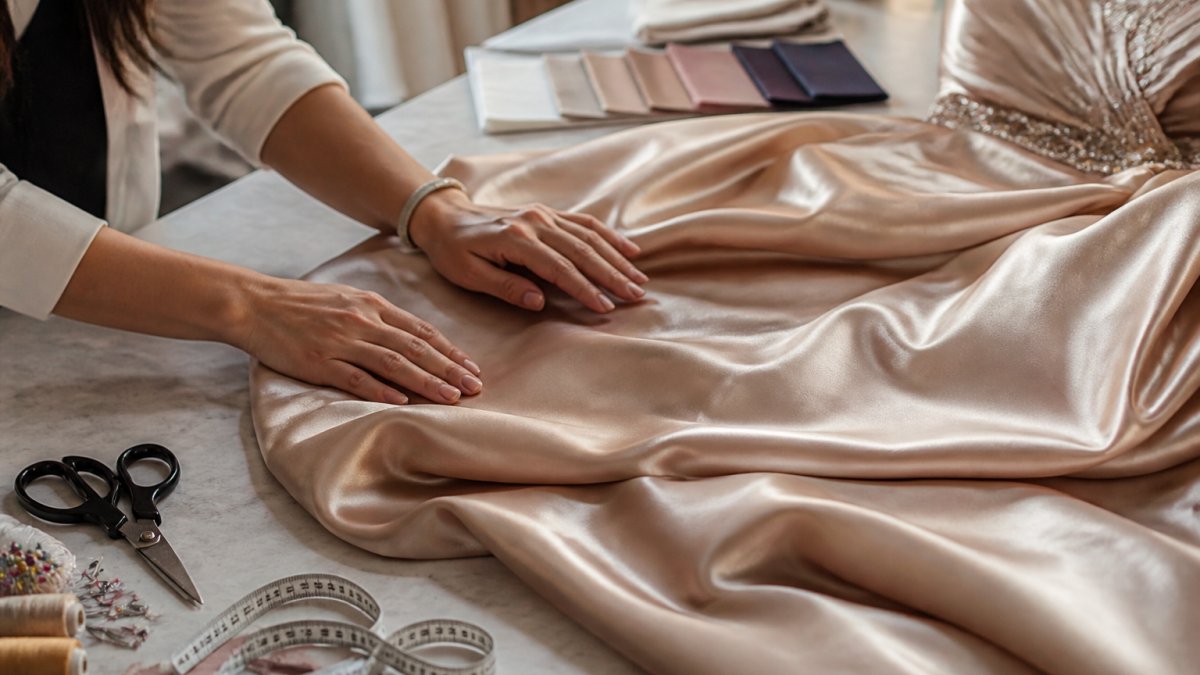
Quality assessment at the rack takes about ninety seconds if you know what to look for. Run this checklist before you commit to any formal piece, then confirm your read with two simple at-home tests.
- Check the selvedge on any visible seam allowance: a tight, clean edge signals controlled weaving.
- Hold it to light to judge opacity and spot thin patches.
- Rub the fabric between fingers to test hand-feel and surface finish; roughness or slipperiness may signal a coating.
- Scrunch a corner and release it to gauge crease resistance and recovery.
- Inspect the grainline at the seams: fabric cut off-grain will twist and hang unevenly.
- Look for puckering along stitching, a common sign of poor tension or unstable fabric.
- Compare sheen across panels: mismatched lustre means the pieces were cut from different dye lots.
- Count the weave density by holding a swatch against a light source: a denser weave shows fewer gaps between yarns, which predicts better shape retention at stress points like elbows and seat.
The Wrinkle Test
Fold a small section of the fabric firmly between your thumb and forefinger for five seconds, then release. A high-quality wool or wool blend should spring back with minimal residual creasing; a silk may hold a soft fold that smooths with a light shake. If the crease sets hard and stays, the fiber is either short-staple or blended with a high proportion of synthetic, and it will look tired by the end of an evening.
The Burn Test (On a Spare Swatch Only)
Most guides tell you to feel the fabric; few tell you how to verify fiber content. If the retailer will give you a spare swatch or you are working with a sample, a controlled burn test reveals what the label may not. Hold a small piece with tweezers over a fireproof surface, away from anything flammable, and observe:
- Wool and silk smell like burning hair and leave a crushable ash.
- Cotton and linen smell like burning paper and leave a soft gray ash.
- Polyester and other synthetics melt, bead, and smell chemical, leaving a hard plastic residue.
Never perform this test on a garment you intend to keep, and never rely on it alone; it is a confirmation tool, not a substitute for the label.
What the Checklist Cannot Tell You
Visual inspection and at-home tests confirm fiber integrity and weave quality, but they do not measure how a fabric will age. Ask the retailer how the piece has performed after repeated wear, and check whether the maker publishes fiber origin or mill information. A fabric that passes every test on the rack can still fail in year three if the finishing was rushed.
How to Choose High Quality Formal Fabrics for Suits and Tailoring
For tailoring, prioritize fabric recovery and weave density over softness. A suit is a working garment: it must hold its shape through sitting, standing, and travel. Merino wool and dense wool blends recover best; loose, open weaves lose structure at the elbows and seat within months.
Match the Weave to the Silhouette
Fabric choice should follow the cut, not the other way around. A structured, padded-shoulder jacket needs a cloth with enough body to support the canvas; a soft, unpadded Neapolitan-style shoulder needs a lighter, more pliable cloth that follows the body. Ask how the fabric behaves after tailoring alterations: dense weaves tolerate adjustment better than loose ones, and a cloth with too much stretch will fight the tailor's needle.
Read the Fiber Specs, Not Just the Name
"Wool" covers a wide range. Super 100s through Super 130s wools are common in formal tailoring; higher Super numbers indicate finer fibers, which feel smoother but wear faster at high-friction points. For a suit you intend to wear weekly, a mid-range Super 100s or a wool-blend with a small amount of synthetic for recovery is often more practical than an ultra-fine cloth. Check the label for fiber origin where available: Australian and New Zealand wools are commonly cited for consistent staple length, which translates to smoother yarns and better resistance to pilling.
Weave Density and Recovery in Practice
A dense weave resists distortion at the seams and holds a pressed line through a long day. To test recovery, scrunch a sleeve or trouser leg firmly and release; the fabric should smooth out within seconds. Techno crepe blends, like those in our Italian-crafted NORMEET NAVY 2 PC SUIT, offer crease resistance with a clean, modern line. For a more traditional drape, our NORMEET PLAID SUIT is cut from Merino wool and made in Italy, where the weave does the work of holding the silhouette.


Dress Code and Climate
A black-tie suit calls for a denser, darker cloth with a subtle sheen; a business-formal suit can carry a lighter weight and a more visible weave. In warmer months, an open weave or a wool-linen blend breathes better but wrinkles more, so plan for a garment steamer rather than an iron. In cooler months, a flannel or a slight nap adds warmth and hides minor creasing, at the cost of a softer, less crisp line.
The Fit-Fabric Interaction
A beautiful cloth on a poorly cut jacket will still pull across the shoulders. When you shop, ask how the fabric behaves after tailoring alterations; dense weaves tolerate adjustment better than loose ones. Bring the shirt and shoes you plan to wear with the suit so you can judge the full silhouette, and check the fabric's drape at the shoulder seam, where poor recovery shows first.
How to Care for Silk and Velvet Garments
Silk and velvet reward careful handling, and fabric care longevity is where most wardrobes quietly lose value. Store silk on padded hangers away from direct sunlight, which fades dye and weakens fibers over time. Velvet should hang rather than fold, because pressure crushes the pile permanently.
- Silk: hand wash in cool water with a gentle detergent, or dry clean structured pieces. Never wring.
- Velvet: dry clean only; steam rather than iron to lift crushed pile.
- Both: allow air circulation between wears and keep away from perfume contact points.
Conclusion
Choosing formal fabrics well is a skill, not a splurge. Read the fiber content, feel the hand, check the weave, and match weight to occasion. That discipline is what separates a garment you wear once from one you reach for season after season.
Boutique Rococo curates imported occasion wear with exactly that standard in mind: rare labels, considered fabrics, and guidance tailored to your shape and the event. Explore our collection or book a styling consultation and let us help you invest in pieces that hold their beauty.
Frequently Asked Questions
How can you tell if a fabric is high quality?
High quality formal fabrics show a tight, even weave with no visible gaps or loose threads. Check the selvedge edge for a clean finish, hold the fabric up to light to assess opacity, and feel the hand: quality silks and wools feel smooth and substantial, not thin or scratchy. Natural fibers like silk, wool, and cotton typically offer better drape and longevity than synthetic blends, though Italian techno fabrics can perform well in tailored suits. Always inspect seams and lining before buying.
Are natural fibers always better than synthetics for formal wear?
Not always. Natural fibers such as silk, wool, and cotton offer breathability, luxurious drape, and classic elegance, making them ideal for gowns and tailored suits. However, high-quality synthetic blends, like the Italian techno fabrics used in some Boutique Rococo suits, can provide stretch, crease resistance, and durability. The key is the quality of the weave and finish, not just the fiber content. For evening gowns, natural fibers often feel more comfortable and look more expensive.
What fabric makes you look expensive?
Fabrics with a subtle lustre, fluid drape, and substantial weight read as expensive. Silk, velvet, and fine wool are classic choices. A high-quality silk satin or crepe has a soft sheen that catches light without looking shiny, while velvet adds depth and richness. Merino wool suits, like the Normeet Plaid Suit at $1,500, look refined because of their fine fibers and precise tailoring. Avoid fabrics that pill, wrinkle easily, or have a plastic-like sheen.
What is a good fabric for a dress?
For formal dresses, silk, velvet, and high-quality crepe are excellent choices. Silk offers breathability and elegant drape; velvet provides warmth and a luxurious texture for evening events. Consider the season and setting: lightweight silk for summer galas, heavier velvet or wool blends for winter. Always check the fabric weight and lining quality. A well-lined silk gown will hang better and last longer than an unlined synthetic dress.
How do you care for silk and velvet garments?
Silk and velvet require gentle care to preserve their lustre and shape. Dry clean silk garments or hand wash in cool water with a mild detergent, then lay flat to dry away from direct sunlight. Velvet should be dry cleaned only; brushing the pile with a soft brush after wear helps maintain its texture. Store both fabrics on padded hangers or folded with acid-free tissue, and avoid hanging velvet for long periods to prevent stretching.
Which formal fabrics are most durable for long-term investment?
Wool, especially merino and other fine wools, is highly durable and resists wrinkling, making it ideal for tailored suits. Silk is strong but delicate when wet, so it requires careful handling. High-quality synthetic blends, such as polyester-viscose mixes, can be durable and easy to care for. Look for tight weaves and proper finishing. A well-made wool suit, like those from Boutique Rococo, can last for years with proper care and storage.
Ready to find a formal piece that earns its place in your wardrobe? Submit your details and our team will guide you through the collection.